Accidental Devotions
Kelli Russell Agodon
Copper Canyon Press, May 2026
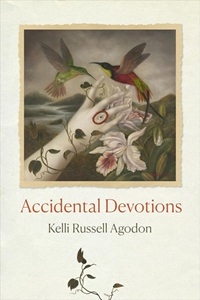
Copper Canyon Press describes this book as a “defiant field guide to staying human.”
This 112-page collection of about 45 poems is arranged in four parts: “Scrolling for God,” “Rebel Angels,” “Cathedral of Clouds,” and “Unmistakable Prayer.”
The poems explore a poet’s quest for identity in a world where technology permeates every aspect of people’s lives. The poems are, at once, funny, deeply philosophical, and a deeply personal reflection on sexual identity. The poet uses humor to examine lived experiences.
What strikes me is how she weaves the ordinary technological phrases into something profound. For example, “Alexa, Why Am I Falling Apart.” In this poem, a simple act of asking Alexa mundane questions turns into asking her some serious ones. Alexa’s inane answers and struggles to respond make you chuckle, highlighting that technology, despite its help, can’t replace human connection, which is a comforting thought.
In “Hey Kel, It’s Em, I Called Because I Read Your Poem,” the act of leaving a sincere, heartfelt message becomes what I assume is a monologue from none other than Emily (Dickinson) offering advice to the poet Kelli.
“I know you say that you’re accidentally
devoted, but what if you’re inadvertently
lustheavy?”
On the other end of this poet-to-poet dialogue, “We Are the Only Poets, and Everyone Else Is Prose,” the poet pays tribute to Emily Dickinson. “It’s impossible not to love you.” The poet feels so close to Emily that there’s “—barely a dash between us.”
Drawing inspiration from Dickinson, Rilke, and Millay, the “ghosts of cannon,” the poet has mastered their technical skills as well. Though technically precise, the poems feel conversational and familiar. Only when you step back do you realize their brilliance.
The ultimate poem of the collection, “Necessary Prayer,” is a nod to Emily Dickinson’s “A Letter to the World.” A “lifetime of letters sent to / your mailbox” reminds us that every generation of poets draws from the previous and leaves a legacy for the next. Language is inadequate, but its power fosters hope and connection.
“Many ways we can still hold joy
We go on not healed but hopeful.”