All posts by Pratibha

World Poetry Day

In 1999,  UNESCO (the United Nations Educational, Scientific and Cultural Organization) designated March 21 is as World Poetry Day to celebrate ” linguistic diversity through poetic expression” and to increase “the opportunity for endangered languages to be heard.”

I take this opportunity to share beloved poems from the four languages, Sanskrit (Kalidasa), Hindi (Subhadra Kumari Chauhan), Marathi (Bahinabai Chaudhari), and Of course, English (Emily Dickinson). Except for the Sanskrit poet Kalidasa, I consider the other three poets as my foremothers in the sense that I love them, admire them, and draw inspiration from them.

  1. संस्क्रुत (Sanskrit)
    A verse from Meghdut (Cloud Messenger) by Kalidasa.

आषाढस्य प्रथमदिवसे मेघमाश्लिष्टसानुं।
वप्रक्रीडापरिणतगजप्रेक्षणीयं ददर्श।।

Loosely translated:
On the very first day of Aashadh, the cloud leans over
the cliff as if an elephant about to engage in amorous games

Aashads is the first month of Monsoon according to the Hindu Calendar.

  1. हिंदी (Hindi)

झाँसी की रानी (Queen of Jhansi) by सुभद्रा कुमारी चौहान (Subhadra Kumari Chauhan)

About The Queen of Jhansi.

A very good English Translation can be found here.

  1. मराठी (Marathi)

मन वढाय वढाय by बहिणाबाई चौधरी

मन वढाय वढाय, उभ्या पीकातलं ढोर ।
किती हाकला हाकला, फिरी येतं पिकांवर ।।

मन मोकाट मोकाट, त्याले ठायी ठायी वाटा ।
जशा वार्‍यानं चालल्या, पानावर्हल्यारे लाटा ।।

मन लहरी लहरी, त्याले हाती धरे कोन? ।
उंडारलं उंडारलं जसं वारा वाहादन ।।

मन जह्यरी जह्यरी, याचं न्यारं रे तंतर आरे ।
इचू साप बरा, त्याले उतारे मंतर ।।

मन पाखरू पाखरू, त्याची काय सांगू मात?।
आता व्हतं भुईवर, गेलं गेलं आभायात ।।

मन चप्पय चप्पय, त्याले नही जरा धीर ।
तठे व्हयीसनी ईज, आलं आलं धर्तीवर ।।

मन एवढं एवढं, जसा खाकसचा दाना ।
मन केवढं केवढं? आभायात बी मायेना ॥

देवा, कसं देलं मन आसं नही दुनियात ।
आसा कसा रे तू योगी काय तुझी करामत ॥

देवा, आसं कसं मन? आसं कसं रे घडलं ।
कुठे जागेपनी तूले असं सपनं पडलं ॥

Loose English Translation

The mind is a truant by Bahinabai Chaudhari

The mind is a truant like cattle in a field
You can drive it away, but it will always return

The mind is a stray; it wanders in all around
As the waves spiraling away in a breeze

The mind is temperamental; who can rein it in?
It’s as wild as the blowing wind

The mind is toxic; its ways are strange
A scorpion or snake is preferable; at least there are antidotes

The mind is a bird; how many of its exploits should I name?
One moment it’s on the ground; next, it has soared to the sky

The mind is too quick and so impatient
It’s lightning that strikes in a flash

The mind is small as a poppy seed
And how big is it? Even the sky can’t hold it

God, what is this unique mind you granted us?
What kind of Yogi are you? What is this marvel you created?

God, what is this mind? How did it arise?
What is this vision you saw while fully awake?

English
A Wounded Deer – Leaps Highest or as I like to say, “don’t let them see the blood.”

A Wounded Deer – Leaps Highest
By Emily Dickinson

A wounded deer – leaps highest
I’ve heard the hunter tell;
‘Tis but the ecstasy of death,
And then the brake is still.

The smitten rock that gushes,
The trampled steel that springs:
A cheek is always redder
Just where the hectic stings!

Mirth is mail of anguish,
In which its cautious arm
Lest anybody spy the blood
And, “you’re hurt” exclaim

Sparrows


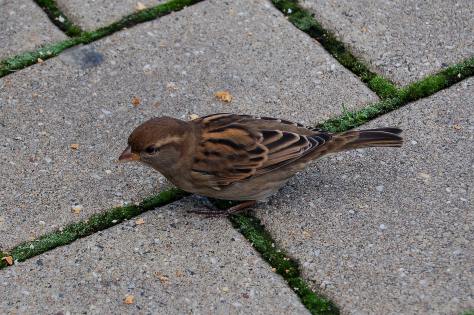
It’s the Spring Equinox today. Not only that, it happens to be World Sparrow Day.  It caught my attention because I have grown up with sparrows around me, listened to the nursery rhymes about sparrows, read children’s stories about sparrows. In Bombay (Mumbai now) sparrows were the only birds around, at least the ones I noticed. So I was disheartened to read that the sparrows are becoming extinct in Mumbai and the pigeons are taking over.  Nothing against pigeons, but sad about sparrows. Here are a few of my sparrow poems to amuse you.

The House Sparrow

Sparrow pauses on my window sill,
chirps a quick note, looks left, looks right, and
flies away leaving behind a half-eaten seed,
like an unfulfilled desire.

I see her every day bathing in dirt,
small brown wings flick around dust.
Just a small bird flying under clouds,
livening up my solitary afternoon.

My friends say, the male sparrow feeds the nestlings.
but, I see her at dusk, baby sparrows by her side,
pecking feverishly.
Mouth of the nestling, open, eager, waiting.
She holds a seed in her beak and drops it in.
A motherly act, if you ask me.

Kitty purrs behind me.
I pick her up and carry her away.

(First appeared in Mused – BellaOnline Literary Review, Fall 2014)


The Art of Mothering

Sparrow like a seamstress
Pleats feather upon feather
Shielding the nestlings
From the perils of cosmos
Not one of them will
Perish of nature’s vagaries
Before she can train them
The intricacies of flight
Nourish & coddle them only
Until their instincts stir
Until they soar to the sky
A Simple miracle
Letting go
The concept so elusive
To humans

(First appeared in Entropy, July 2020)


Low-Flying Bird

upon being shoved aside, the shock
doesn’t distress her, only the flock
she wants to belong, those who fly high
the wings untouched by human hands

being accustomed to the margins
she cozies up with the flowering hedge
to escape the constant jet engine whir
maybe a nosedive in lightning & thunder

flying solo isn’t a choice but a necessity
for the fallen bird, forsaken from the nest,
who never learns the secret of soaring
uncertain wings in the air flapping furiously

(First appeared in Entropy, July 2020)


Burning Woman

I set fire to the memories every summer
all through the fall and winter, word by word
I string the song of a savannah sparrow
staying close to the ground
foraging the buried syllables
seeping through the snow
and thaw them over my warm breath
those little things weigh heavy on my tongue
I am so tired of the harshness
grating on my ear
year after year,
I return to the ground and
polish the rough edges of words
the fierce polishing—the fleeting gleam
sometimes the sparks fly
singe my lashes, hair on fire
this merciless struggle
yet this sweet song of the sparrow

(First appeared in Entropy, July 2020)


Hilde Weisert

Trillium

A Spring ephemeral

March mud slides into April,
April slaps the house silly,
slams the door back in my face.

May, I take a morning walk
in an anorak, only to find
trout lily’s sprouted gills

instead of flowers. Aeolus
roars and shoves me home,
my retreat now one more

sad retreat. I’ll stay in
and set the locks against
this botch, this washed-out

washed-up spring—

So who is it who calls
my name, and who is it then
who runs, arms akimbo,

down the brambly
path, afraid to be
too late, afraid

this mean and frigid
mountain has no more
place for fragile beauty?

Who but I
who cups the wide
leaves in shaky

palms, lifts
the bowed and
blood-red head

for a kiss,
thrilled once more
by what I’d almost lost?


Editor’s Note:
The narrator, concerned that the mountain landscape has altered due to climate change, looks for the familiar spring sights and flowers on her walk. Assonance, consonance, alliteration, and specific details of the landscape, weather, and flowers keep the reader engaged.


Hilde Weisert’s poetry collection The Scheme of Things was published by David Robert Books, 2015. Poems in magazines including Ms., Cincinnati Review, Plume, Cortland Review, Prairie Schooner, The Sun, Lips, anthologies including Choice Words and What They Bring: The Poetry of Migration and Immigration. Awards include 2017 Gretchen Warren Award (New England Poetry Club), 2016 Tiferet Journal Poetry Award. She is the president of the Sandisfield Arts Center in western Massachusetts. She lives in Sandisfield and Chapel Hill, North Carolina.

Goddfrey Hammit

Pulp to Pulp

The daily newspaper, it was announced
by way of a story buried on B3–
appropriately, the page just before the obituary pages–
would no longer be delivered beginning in the new year,

meaning no longer would the days begin with those heralds
driving through the dark before the dawn,
some with a sure aim,
their pitch landing a step or two from the porch,

and others with the haphazard hope that that baton,
spinning end-over-end,
thrown from the shoulder like a rock skipped across a lake
by someone who had never skipped a rock across a lake,

might, at least, come to rest
somewhere between one fencepost and the next.
And, for the sleeping, no longer would the news
be crouched beneath a car in the driveway,

or hidden in the lawn that should have been mown last week,
or buried beneath the gathering snow that had silently built up overnight,
the paper waiting as patient as a cat
and lapping up the wetness of morning,

which would be the first consternation for those barely out of bed and,
already, presented with such a simple disappointment.
In those final months, the letters to the editor page,
alongside the usual lectures penned from atop imagined soapboxes,

was filled with those concerned at the loss of a ritual:
how would coffee taste when not paired
with that smell of fresh pulp and cheap ink?
And here, I thought of my grandmother,

who had developed the habit
of opening the obituary section as if this, too,
was news that ought to concern us all,
these worlds that had ended some time in the last week and now

huddled together between local news and the weather.
Last year, she had appeared in those pages,
in an obituary we had found already written,
fit to print years ago,

composed when she had been in fine health,
and I imagined her at her kitchen table,
those faces of dead strangers stacked in their
four-down, four-wide paper mausoleum in front of her

as she looked for familiar faces
and then as she searched for inspiration,
finding the words,
one ordinary afternoon in the past,

to best capture her life that,
one ordinary afternoon in the future,
would be taken out with the evening trash
by a complete stranger who, on a rainy morning,

would bend down in that shaky way,
and handle the sopping pages like lily petals,
turning in that shaky way to B4
to read the news of the day.


Editor’s Note: The standard morning newspaper delivery and reading rituals described in vivid images stand for life’s expectations and disappointments and the inevitable end. I loved the way the poet portrays the poignancy of the experience and nonchalant continuity of the life-cycle


Goddfrey Hammit was born and raised in Utah, and lives in Utah still, in a small town just outside of Salt Lake City. Hammit is the author of the novel Nimrod, UT.

International Women’s Day 2021

March 8th is designated as International Women’s Day to:

celebrate women’s achievements
raise awareness about women’s equality
actively advocate for gender parity
raise funds for female-centric charities

The theme for this year is “choose to challenge.” Challenge ourselves and those around us to be alert for gender disparity and discrimination and actively seek to bring equality so that we don’t have to set aside such a day in the future.

On this occasion, I am bringing you an obscure poet from my home state of Maharashtra in India. I have always admired Bahinabai Chaudhari (1880 – 1951) for her natural poetic talent and fierce independence. She wasn’t aware of her talent and never wrote down her ‘songs’ which she composed while going about her daily routine. I am presenting her poem about the plague pandemic during 1940 as it is incredibly relevant today. The original Marathi version is followed by my loose translation. I can’t match her meter and rhyme, but the meaning is extremely relevant. I hope you join me in saluting this favorite poet and at least three more female poets I plan to present this month.

पिलोक पिलोक
आल्या पिलोकाच्या गाठी
उजाडलं गांव
खयामयांमधीं भेटी

पिलोक पिलोक
जीव आला मेटाकुटी
भाईर झोंपड्या
गांवामधीं मसन्‌वटी

पिलोक पिलोक
कशाच्या रे भेठीगांठी !
घरोघरीं दूख
काखाजांगामधीं गांठी

पिलोक पिलोक
आतां नशीबांत ताटी
उचलला रोगी
आन् गांठली करंटी

plague, plague
the lumps of plague are here
the towns are deserted
people meet in the open fields

plague, plague
people feel only despair
the huts are on the outskirts
the town has become a graveyard

plague, plague
what get-togethers?
every household filled with sorrow
lumps in armpits and groins

plague, plague
now only destiny is a bier
pick up the ailing
and remain in quarantine

Shelby Wilson

Bookmaking

for Al Brilliant, even though he probably doesn’t remember me

Those mild south Texas Spring mornings
you spent guiding and goading four college
seniors in the arduous art
of handmaking books might have
seemed squandered,
but I remember.

I remember the aroma of Earl Grey
in that makeshift classroom—
the Christian Science Reading Room
lent us through kindness—
even though our only shared religion was
a faith in the words on the pages
we saddle-stitched together.

We huddled around the table.
I know now, we were leaning into
your soft-spoken words,
wisdom you near-whispered
in your Brooklynite accent.

You talked of literature,
*******and travel,
*******and books you’d asked us to read,
*******and the sixties,
*******and social justice,
*******and California,
where you founded your
slow and steady press.

My klutzy hands would oft
poke the tip of my awl
clean through a signature of folded pages,
piercing my hand.
I’d bleed on your pages—
these spotted books, you let me keep,
proof of the sacrifice required
for the sacrament of the
enfolded black-inked words.

You taught me that humility is
not mentioning that you’d published
*******Robert Bly,
and Margaret Atwood,
and Leonard Cohen,
and Marge Piercy.

Once, Langston Hughes surfaced from your memories—
his serene, muted intonation
when he would finally speak after
a long pause, in thought,
prior to his purposeful reply
was all you really told us about him.

The art of making books is
lost to me now,
but the value of a life in books
has been collected, sewn, and
bound into me.

I think that is all you wanted
********all along.


Editor’s Note:
I love this heartfelt tribute to Al Brilliant by an eager student of bookmaking. The poet uses vivid descriptions of the bookmaking process, tying each one into a page of memory that finally results in an exquisite book in the student himself.


Shelby Wilson writes, teaches, and lives in Amarillo, Texas. He holds a B.A. in English from Texas A&M University and an M.A. in English from West Texas A&M University. His writing has appeared in many publications, including Ink & Nebula, Sparks of Calliope, Backchannels, BeZine, and anthologies from Madness Muse Press, Clarendon House Publications, and Elizabeth River Press.

Allison Joseph

Black History Month Day 28.

I would like to end this month with a favorite poem of mine. It reminds me of a 12-year-old me enthralled in the magic of books, marveling at the skill of the novelists and poets to ignite the imagination, and ignoring my chores. Dance entered my life much later, but with the same wonder and awe.

I started this month by presenting a poem from Phyllis Wheatley, a slave whose destiny was defined by her master. I end the month by offering a contemporary poet born and raised in the free world and who once said, “I write to be a recorder, observer, participant, and sometimes, even judge.”

Soul Train
By Allison Joseph (1967-)

Oh how I wanted to be a dancer
those Saturday mornings in the
Read the complete poem here.

Georgia Douglas Johnson

Black History Month Day 25.

Black Woman
By Georgia Douglas Johnson (1880-1966)

Don’t knock at my door, little child,
….I cannot let you in,
You know not what a world this is
….Of cruelty and sin.
Wait in the still eternity
….Until I come to you,
The world is cruel, cruel, child,
….I cannot let you in!

Don’t knock at my heart, little one,
….I cannot bear the pain
Of turning deaf-ear to your call
….Time and time again!
You do not know the monster men
….Inhabiting the earth,
Be still, be still, my precious child,
….I must not give you birth!


This poem is in the public domain.